Showing posts with label pop culture. Show all posts

Wednesday, February 26, 2014

The year of Biblical movies, oh my!

Apparently this is the year of biblical movies.

February 28 is the opening of Son of God, which is basically a re-run of the the History Channel's series with some additional cuts, and apparently less devil. Then there's Noah. Or it might be Lord of the Rings IV. It's hard to tell from the trailer. Then, don't forget about Heaven is for Real, which is a big-screen adaptation of a NY Times bestseller from a couple years back. Finally, December brings us Exodus and Mary, Mother of Christ, because who didn't see Joel Osteen as an executive producer coming?

Russell Crowe: Master and Commander... and Noah. He can sail a ship and build one.
Now, I got ultra-snotty about these things, so I'll just go ahead and apologize right now. I mostly don't like these kinds of movies. I didn't like Passion of the Christ and the History Channel series on the The Bible left me less-than-thrilled. It wasn't even that it was bad theology or anything; I just didn't care for it. That's a critique that isn't remotely fair, and I realize that, but it's also simply true for my experience.

I've been thinking more and more about why this is, since apparently I'm going to be barraged with these movies over and over in the coming months, and I've come to this conclusion: I want these movies to do too much.

Let's forget Heaven is for Real for a moment, because that's really a different kind of movie compared with the biblical ones. For the others there are several things I want from them: I want them to be historically accurate, I want them to be theologically sound (not the same thing), and I want them to be entertaining (because they're a movie, duh!). Only, I'm pretty sure hitting all three is an impossible task.

Sunday, March 24, 2013

The Hero We Need, Not the Hero We Deserve: Jesus and the Dark Knight

Text: Luke 19:41-48


          One of the great things about reading the Bible in an orderly fashion, as we’ve been doing now for almost a year, is that you begin to see how stories connect in ways you may never have realized. For instance, you’re probably all pretty familiar with the Palm Sunday story. Jesus comes to Jerusalem, people wave palm branches and shout praises at him. That is the yearly ritual. It’s our intro-to-Holy-Week-Jesus-party. Everybody’s going to be there: Jesus, the donkey, some disciples, people waving Palm branches; it’s going to be a blast. However, I should warn you that since we’re reading more than just the Hosannas and the branches, this party might not turn out quite like you would want. You see, Jesus isn’t doing anything particularly royal in Jerusalem. He’s not making some nice gesture for his big supporters, and he’s not having a campaign fundraiser with $10,000 plates. Instead, Jesus is going to do what Jesus does. He foretells the destruction of Jerusalem (just wait about forty years) and then he heads over to the temple to throw some of the wealthy out. You can imagine, that was unexpected for the gathering throngs of supporters. His speech was heavy on the judgment and his actions didn’t seem to curry any favor with the wealthy elite. What kind of politician was this Jesus anyway?

Monday, December 10, 2012

The Sad Odyssey of the Discovery Channel

I have long been a fan of the Discovery Channel. I have even written about it before on this blog (as in right here), but I think those days are sadly at an end. It's been a long, slow and tedious fall from grace for the channel that was once about the only thing I would watch on television, and I wonder how it's gotten this far. I guess, as a mid-twenties male, this is one of the first things I will someday look back upon as the good ol' days, wondering all the while why they would leave behind what was so good for what is now so contrived and superficial. But before we get there it behooves me to start at the beginning--when things were good and Survivorman marathons frequent.

It was 2006 when the Discovery Channel and I began our close relationship, and oh, the good times we had! Those were simpler days. There was Cash Cab, a lightning-fast, if slightly dumbed-down, game show that took place in a New York City taxi cab; Deadliest Catch, the fascinating real-life story of crab fishing in the Bering Sea; Dirty Jobs, hosted by the always entertaining Mike Rowe; Man vs Wild, a fun, though definitely contrived and not at all realistic portrayal of survival in the wild; Planet Earth, the series that redefined how "nature" video was shot; Survivorman, which was basically a more realistic and far more interesting version of Man vs Wild; and, of course, Mythbusters, the crowning jewel of the Discovery lineup.

Wednesday, December 5, 2012

Jovan Belcher, Bob Costas and the Oversimplification of Complex Issues

This is a tough subject. I should start with that--if nothing else to remind myself that this is shifting sand on which I blog. It's much easier to come across as heartless than it is to be thoughtful, especially when the reality you are broaching is shocking and surreal. I acknowledge that. I think anybody who wants to be faithful to real-life stories of pain and loss has to acknowledge that their opinions cannot encapsulate the issue, and that is--in fact--the very point of today's blog.

For those of you who do not know, Jovan Belcher was a linebacker for the Kansas City Chiefs football team who killed his girlfriend and himself last Saturday morning. Were this an anonymous individual committing this crime we would not have heard about it or cared; that's just the harsh reality; but in this case it has stuck in the public consciousness because of the celebrity. I don't think this is a bad thing. What is a bad thing is that instances of domestic abuse and murder don't always hit us like this. That is troubling. But it's also a little off subject.
Photo by Jamie Squire/Getty Images 

Sunday, August 26, 2012

Joseph, the Pit, and Inception


           Do you have a younger sibling? Or are you the youngest child in a family? 
Those of you who are older siblings know what I know, which is that this Joseph story was most definitely written by a younger sibling. See, I have a younger brother, so I can imagine what I would feel if he came up to my parents and I one day and said, “Oh, by the way, I had a dream last night, and you were all bowing to me, because—well—I’m going to rule over you.” That would not have gone over well. I can imagine how much worse it would be for eleven brothers—ten of them older—who actually have quite a bit to gain from their father’s favoritism. We older siblings know that if this story was written by one of us Joseph would not have amounted to much.
            What to do with Joseph…
            This is a hard topic for me—perhaps it is for all older siblings—because Joseph earned none of this, and as an older brother I am tempted to play the “That’s not fair!” card on this one. Joseph was the epitome of the spoiled brat, feasting on the riches of his father through no merit of his own. Unlike other Biblical heroes—David, for example—he had no Goliath moment of character. All we know about Joseph is a couple of dreams and, worse still, his exuberance in sharing those dreams with his family. Not only is he brash and arrogant, he is completely unaware of the effect his brashness is likely to have. He is walking on thin ice.
            These dreams are the thing that sets Joseph apart. Analysis and interpretation of dreams has been around since at least the time of Joseph and probably for as long as human beings have dreamt. We have a fascination with this aspect of our subconscious. Are we telling ourselves something? Is something outside of us giving us wisdom? What do dreams mean?
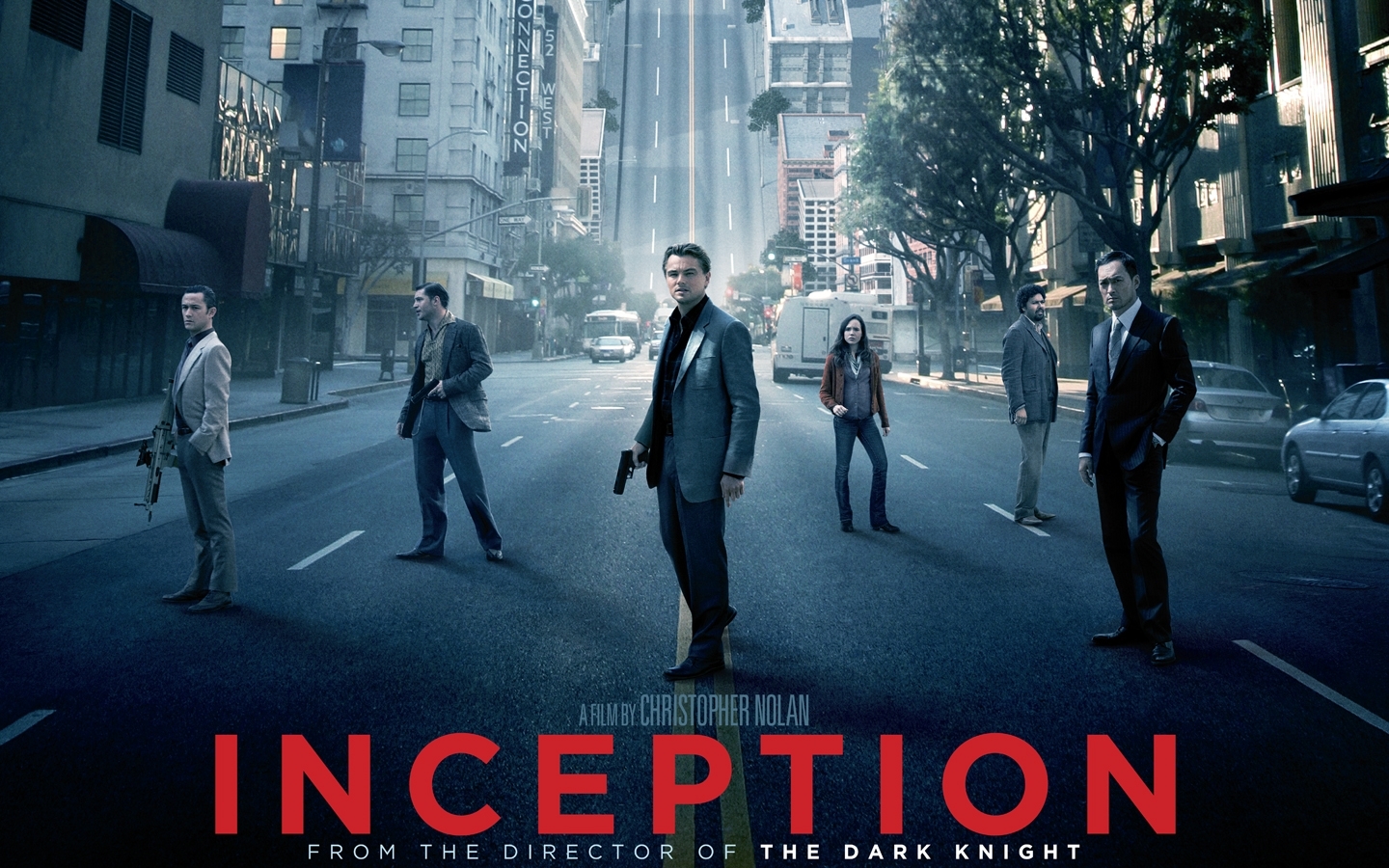
            I can imagine that if I were preaching this sermon sixty years ago I would have talked about Sigmund Freud and his interpretation of dreams, or if I was preaching this forty years ago I would have talked about Carl Jung and his revisions of Freud’s psychology of dreaming, but since this is 2012 I will ditch the psychology and instead interpret Joseph’s dreaming through the only lens that a 26-year-old guy knows—the 2010 Christopher Nolan film, Inception.
For those of you unfamiliar, Inception is a film about invading a person's dream and planting an idea that will ultimately change the course of their lives. One of the questions that the movie raises is: What emotion is so powerful to plant an idea deep enough for it to take hold? Is it personal gain or fear perhaps? No, none of those things emotions will do. The person dreaming rejects these as unrealistic bases for a new idea. Instead, the only emotion that sticks is catharsis. Catharsis combines both reconciliation and forgiveness, which are the only emotions powerful enough to make a person change his course.
            So what does any of this have to do with Joseph?
In these early dreams, Joseph interprets from a point of self-interest. We don’t know if it is God or Joseph’s self-conscious desires that are causing him to dream these dreams, but regardless of their source Joseph sees them as visions of his own future glory. Nobody can mistake his reasons for sharing the dreams with his family. He is setting himself above his clan, but in so doing he is misreading the situation. The vision at the heart of those dreams is one of leadership, but in his excitement to share what he has seen Joseph shows he is not yet fit to be a leader. First, he must fall. Then, there will be the possibility of catharsis before he rises to the place he will one day stand.
            There’s that old saying that pride comes before a fall. That saying may very well originate here, as Joseph quite literally falls into the pit, albeit with a forceful nudge from his brothers. It’s not that his brothers are justified in their actions, though in their situation I probably would have been right there shoving little Joey (I can’t tell you how often I would have sold my brother to some passing Ishmaelites if the opportunity arose). Joseph doesn’t have a voice in this part of the story. We don’t know exactly what is going through his head, but I can imagine this is not what he expected. The dreams of greatness he had were portents of a future beyond his grasp. This was going to be much harder than he could have imagined. It was going to be much harder for the entire family. God had a trajectory in mind for Israel, but it took them much farther astray than anybody could have predicted.
            We have this problem with God’s will. For one, most of us don’t have dreams that depict what the future will hold, or if we do they are muddled visions of a reality we cannot yet discern. There is a real debate among Christians as to whether God has everything planned and whether we have any control over the future. Well, Joseph teaches us quite a lot about what God’s plan looks like. It is never fully crafted, or at the very least it appears to us only dimly. It is never without our input—both positive and negative. God’s plan is not intended for our ill, though ill may come of our response to it. Finally, God’s plan is God’s and not ours.
            I cannot imagine that God, being God and not subject to constraints like time and space, looks at the world like we do. When Joseph dreams these dreams they are visions of a future—yes—but not one that can come to be without the active participation of Joseph, his brothers and his father. Man plans and God laughs—not because God knows every little action that’s going to follow but because God’s view is much wider; ours is one-dimensional. Like Joseph, we interpret things in terms of personal gain. Joseph knew nothing of how to be a leader to his brothers until he was rejected and cast into the pit.
I hope it doesn’t take that kind of betrayal for you to understand your purpose in this life, but some of you have already been down into that pit. You have already had awful things happen to you—some, like Joseph, at the hands of family. You have to fall in order to rise.
            The Joseph story is a story lived out again and again in our lives. First we are prideful and exuberant, then we get shot down; then—slowly and after much backsliding—we discover our purpose in this world. Almost universally, that place in life looks nothing like we imagined it. When his family finally does bow to Joseph it is not in the place or manner he would have supposed. He becomes a leader in Egypt but finally wants nothing more than catharsis for those years gone by.
            We don’t know what we want. That is our fundamental flaw. We think we know—we think we want simple things: money, time, a person or a thing. We think if we have those things then we will be happy, but when we have it all we discover we want more. Soon, we are numb to life, unable to care for the good or the bad. The worst life is the life that no longer values catharsis; the life that learns no lessons from loss; the life that does not care. Catharsis requires loss, then a turning, and finally redemption. It requires falling into the pit. It requires looking deep within ourselves to find the essence of our humanity and turning around. It requires forgiveness.
            May you forgive as you are forgiven; may you find catharsis for all your hurt; and may God lead you in paths you would not have imagined.

Wednesday, August 22, 2012

The Simplest Idea: Inception and the Church


A pastor at our weekly text study came in with an idea yesterday to read a book together and discuss. The book was titled, I Refuse to Lead a Dying Church, by Paul Nixon. This pastor was in need of finding some wisdom to deal with the travails of leading a struggling congregation in the midst of a declining mainline Protestant denomination. In short, he was in a place where a lot of clergy find themselves--pastoring to decline.


I found myself thinking, "Are we still there?" Are we still focusing on leadership techniques and programs for pastors to churches in decline? Are we still moping about the challenges of churches with fewer members? Are we still talking about the death of the church?

Some of us have moved on. I mean, we have thought about this. For many church leaders in my generation the decline of the church is not something new but in fact the only reality we have ever known. When pastors and professors have tried to shock us by saying things like, "The church as you knew it is over" we have looked at them blankly and thought, "Actually, this is the only church I've known. The church you've known is over."

But most of all, we think about how the church is going to look different. I was struck yesterday by the methodology of having a book study in the midst of declining congregations. It felt so wrong. For one, it is not the pastors who need to think about this; it is the congregation members who have no formal training. But more importantly, they need to come to this idea in such a way that it actually sticks--that it actually penetrates their psyche and makes the light bulb go on. For most people, that's not so easy.

That's when it hit me. This is really a matter of inception. The 2010 Christopher Nolan motion picture, Inception, is based on the premise of changing a subject's mind by planting an idea in that person's brain. In order to make inception work you first need a goal--what you want the subject to believe. Second, you need an idea powerful enough to accomplish that change. In the movie, the goal was to get the subject to break up his father's company; the idea was that the subject's father loved him and wanted him to choose his own path.

Crucial to the success of inception is implanting the right idea. I find that churches recognize a problem--there are less people in mainline denominations, less vitality, less energy, etc. But then they come up with all sorts of massive philosophical changes without synthesizing the singular idea behind the matter. So, pastors throw out frightening words like change, missional imagination, rooted confessionalism and the like, which members of our congregation are neither ready nor able to hear. What the mainline denominations have seemingly failed to do is find that one idea that needs to be planted deep in the psyche of our people. So, what is it?

Let's start with what it's not. It's not "we must change;" or "we need to grow." In Inception we learn that neither fear nor material gain are powerful enough motivators to plant an idea. The only emotion powerful enough to make an idea stick is catharsis. Our churches--our congregation members, our people--are desperately in need of catharsis. We need to face our past and hear, like Robert Fischer Jr. on his father's death bed, that the monumental figures of our past want us to go our own way. Semper reformandum, said the leaders of the Reformation, "Always reforming."

But the way most of our people see the church is like that lowest dream level where the buildings and structures of the world are collapsing before their eyes. Moreover, since the structures of the church are tied inextricably to the outside world, this is also how they view their lives. Things are changing: the world is becoming more complicated and chaotic. There are horrible people doing horrible things. There is so much out of our control. The world that we recognize from our past is disintegrating before our eyes.

So, we come to the goal we want to accomplish. In a world whose edifices seem to be crumbling the only catharsis, the only good news, is that this world is not the ultimate reality. Like the spinning top totem that Cobb (Leonardo diCaprio) uses to determine whether he is in the real world, we are in need of something to ground us. The goal of the mainline church's inception, therefore, is not to acclimate our people to change or to get them to see the necessity of being the church in new and different ways. No, none of that will work, and it is precisely the kind of things we have been trying all along. Instead, the goal of our inception is to show people that this world is a mere dream of the ultimate reality. We live in the shadow-lands where things don't quite make sense.
But this realization is not easily achieved. I can preach death and resurrection week after week and it will often seem to be falling on deaf ears. Sure, the Holy Spirit will do its best to open the ears of the people, but I know well enough that the very premise that I'm preaching is far too big. I'm in need of a simpler idea; a synthesis of this new creation. I'm in need of catharsis.

That's when it hit me like a bolt from the blue. We have been making this way, way too complicated. We have been telling people about systems, about programs, about theology and eschatology. We have been telling them about Christology and pneumatology. We have been telling them about historical criticism and other modern methods of reading the Bible. We have been teaching them bits of Greek, Hebrew and Latin. We have been preaching meta-theories when the simplest idea of all has never sunk in, because we never went deep enough. We tried "God loves you" but it just feels so shallow. We tried "You are saved" but it does not connect. These, too, were too complicated. They involved static realities that we could not see. Neither involved catharsis.

You see, we've only taken it down a single level. We've never touched that second dream state, let alone the third, so the idea never stuck. We have to press harder into the subconsciousness of the people we meet and tell them the most fundamental truth that can shape their realities. The truth is this:

You are forgiven.

This is the very essence of catharsis. They are the words that break down the walls around our supposed realities and show us a creation more real than anything our dream-like waking could ever promise. Forgiveness--true forgiveness, not the "I'm sorry" hokum that passes for such in our world--opens doors to a new future with hope.

Church leaders, I cannot impress this enough, the key is going deep enough. This is not just a matter of reciting some words in the liturgy. It is instead meeting those in the most desperate need in their most desperate moments, when their tops are spinning wildly out of whack, and pointing them back to the ultimate, Christ-drenched reality and saying, "You are forgiven in spite of your faults, in spite of the past, in spite of everything historical that binds you to this moment and this place. You are set free--by a Savior who came to re-write history, to make the dead rise and bring about a creation so much more real than anything you experience here and now."

But more important than the words is that single moment of catharsis. In the movie it was the pinwheel that Robert Fischer made for his father, hidden in the safe, that represented the pride his father felt. For us it may be a hug, it may be a cup of tea; it may be something much simpler still. But remember, it is never complicated. Forgiveness never is. But true forgiveness will set the church on fire. It will shake the foundations of our world. It will make us rise again.

So, get planting.

Sunday, May 13, 2012

You can't choose Jesus! A manifesto on how to love.


This may very well color everything that I write, but I can never talk about love without thinking about the wedding scene in The Princess Bride. Wuv, twue wuvwill fowwow you fowever… I remember having a professor show that in seminary as a warning against… well, I’m not exactly sure what. It may have been a cautionary tale against having a really funny lisp and holding an office involving public speaking. While The Princess Bride may not teach us much about love, we are bombarded with messages about what love is that are just as wacky as Peter Cook preaching on mawaige.
Where do we hear about love?
Books… stuff like Twilight (God help us!) and Nicholas Sparks.
The movies… but the classical romance stories of Casablanca now look more like cheap date night flicks that these days even require “crossover” appeal to men, which usually involves tanks, a bank robbery and the obligatory car chase.
The internet… surveys say that more than 20% of all relationships start online these days. Do we learn about love from personality inventories and catchy personal profiles?
Music… Do we learn about love from Justin Bieber or Mariah Carey? (Oy!)
Television… TV may be where most young people encounter something portrayed as “love.” Big Brother, Jersey Shore, Real Housewives of… fill in the blank—wholesome, family programs that teach us all about love. It’s enough to make a person want to give up.
Reality TV tries to tell us what love is. As far as television producers are concerned love is the Bachelor bringing in a cadre of attractive ladies and testing them out one-by-one until finally deciding that one is his “true love.” Reality TV tells us that love is really, really liking somebody; it is one-dimensional devotion with expected physical and emotional benefits. You don’t love somebody because you are willing to sacrifice for them—even if you might throw in a catchy phrase like “I’ll give them the world”—really you are looking for somebody who is your “dream girl” or “dream guy”—that perfect person that will fulfill your every want. Reality TV tells us that love is choosing that which always makes you happy.
I can just imagine Jesus giving this is a big facepalm.
Simply, reality TV is a fairy tale wrapped up in a horror story. Watch it for thirty seconds and you realize immediately that there is something fake in it; there is something that does not match up with actual reality. But dang it if the story isn’t compelling! We still want love to win, even when it’s a horribly fake, commercially-enhanced charade that only resembles love about as much as Cheez-Whiz resembles cheese.
There is a nugget of truth in these commercialized caricatures of love, just like there is something cheesy about Cheez-whiz, but it is woefully misrepresented as the actual thing. Jesus is about the real stuff. And at the risk of sounding... well... cheesy, he offers a version of love that doesn’t sell us short. “Love one another as I have loved you,” he says.
How did he love us? Did he choose us on a reality game show? Did he find us to be fascinating, fun and exciting people? I think now. I mean, look around you. If Jesus loves Scandinavian Lutherans it’s certainly not because we’re fun and exciting.
Luckily, Jesus doesn’t need you to be; he doesn’t need you to dance in the pews. He wouldn’t mind it if you did, but in this part of the country that would be a legitimate miracle. Thankfully, this is not the test of Jesus’ love nor the reason for it. Jesus loved us by taking up his cross and dying for our sake. You know this. You can probably even testify to what that means to you, but let’s not forget that this is a two-part responsibility. Jesus gave himself up to death in order to show us his love, and we are to love as Jesus did. That means dying, folks; straight-up death.
If you’ve ever wondered what it meant when Jesus said to take up your crosses and follow the answer is right here. To love as Christ loved is to die, but not just to pass away at the end of this life (that’s a really easy test that we are well on our way to passing). To love as Christ loved is to die to yourself, to give up your own wants and needs for the sake of others. Simple enough, right? Don't ever want anything for yourself. Don't ever put yourself before somebody else. Forsake your joy for the joy of others.
Easy... right?
Thankfully, Jesus knows us better than we know ourselves. So when we feel high and mighty about our ability to love, Jesus shows up to give us a reality check. “You did not choose me,” Jesus said, “I chose you.”
Love is being chosen. We can’t love Jesus in return; not as we ought. That is why we come back every week to confess our sins and receive forgiveness. If we were capable of choosing Jesus we would be capable of real love, as it is we try our best and sometimes get it right, though often we can't and won't get there, which is why we come back to receive a word of forgiveness.
But doesn't “love requires a choice?" I have heard it said. This is a frequent refrain for those who believe that our salvation depends on us choosing God, giving our hearts over to Jesus, or entering into a relationship with God--whatever the language. Love, they say, requires a response. They believe that in order for us to show our love—whether to God or fellow human beings—we need to be able to choose them.
I think there is an important distinction to make here. Love does require a choice, but it can only come from one who stands on equal terms. We cannot choose God, because we don’t stand as equals with God. If we did, then no problem, we could declare our love for God and God would love us back. By the way, these are similar reasons why a person who has been abused cannot love an abuser. They might think they love him or her, they might be very devoted and feel a deep connection, but it is not love. Love requires an equal playing field. There can be no power dynamics in love.
So as I said, love does require a choice, but it is the kind of choice only Jesus is capable of making on our behalf. Jesus wants us to know, very clearly, that love is not about us. Love is all about self-sacrifice, dying to ourselves for the sake of someone else and needing nothing in return. The expected return on investment for love is zero, zilch, and anything that is reciprocated is grace—a bonus. That’s why it’s hard to love; it’s hard to expect nothing for something that matters so deeply.
But this is also why it means so much more than the junk that’s on TV. I have no illusions that I am going to put the networks into financial ruin by proclaiming that Jesus’ love is better than the Bachelorette, but I do have some hope that dying to the self is still possible in this world. I hope that we can be God’s chosen people, which is to let go of our need to be the choosers. I hope, finally, that we can laugh at the mainstream caricatures of love. Wuv, twue wuv is so much better than that.

Sunday, March 25, 2012

Glory and the Hunger Games


Glory is a funny word. Or maybe it’s a word we don’t know how to use anymore—one of those antiquated Old English things that has fallen out of common use. Sportscasters still sometimes talk about glory, especially British soccer commentators, but for most of us we can hardly imagine a context where the word would come up in normal dialogue. It fits in this whole category of Christian words that nobody else uses, though they remain germane to our worship experience. But “glory” is special even in that category, because it’s not the kind of word—like Covenant, Eucharist, Kyrie, or Salvation—that seems uniquely churchy.
Glory seems like it might be something that anybody can achieve, that is until we think of the glory that Jesus is after. Jesus’ glory is self-sacrificial; in fact, it is complete submission, humbling himself to the point of death. Christ’s glory shows itself on a cross. You see, glory may only be five letters but it is a big word. But enough word study; the real question is why should we care? Why does it matter that Christ is glorified, and what does it mean for us?
            Let’s start with this: glory involves death and resurrection. The image Jesus uses is a grain of wheat—something that sheds its seed in death in order to rise again in the spring. Life requires death, whether it’s grassland, a forest or a farm, whether it’s the life cycle of predator and prey or the chemical gifts associated with organic decay. All life benefits from the death of others. You have benefited from death in your life, both from the things that you have eaten and the people who have gone before. Jesus’ glory is that death taken to an extreme—in dying, he feeds all of creation from the bread of life. He rewrites the rules; death is not just death but a precursor to resurrection.
            Still, our dominant experience of death is hardly glorious. You see this in all areas of life. This weekend was the opening of The Hunger Games movie, taking in record movie receipts across the country. Many of you are probably familiar with the plot, but for those that aren’t: the Hunger Games is a trilogy of books set in a future, post-apocalyptic America called Panem. In Panem, there is a central Capitol which rules over 12 outlying districts, which were crushed in a long-ago war and were now little more than tools of the Capitol. As penance for their insurrection, each district is responsible for providing a single girl and boy between the ages of 12 and 18 to participate in the annual Hunger Games. The Hunger Games consist of these 24 children battling to the death in a nationally televised event with only one emerging as victor.
            This really is a horrific premise. The one certainty of each Hunger Games is that there will be a lot of death—that, and it won’t be pretty. I bring this up today in part because it is so timely, and in part because this is the kind of glory the world is most often interested in. The victor of the Hunger Games does achieve a kind of glory, but it is glory that changes them for the worse. The world of Panem is a mess because their leaders have conflated what is horrific with what is glorious. There is no room for self-sacrifice; nothing like Jesus’ glory on the cross.
            The Hunger Games are a good illustration of our misconceptions of glory. We make our champions—in any field—into figures deserving of praise. Maybe we are civilized enough that we honestly believe we would never glorify a killer, but given the opportunity I would guess we aren’t so different from those people in the Capitol. Our idea of glory is being the best at what we do, being exceptional, surpassing the lot we were given in life. Our glory has become about fame and wealth.
            This is our “glory” problem. Death doesn’t seem glorious; it seems like weakness. All those kids who die in the Hunger Games are the unfortunate losers, none of whom could be described as glorious in the Panem world. Panem is a rough place; actually quite a godless place. This is what life looks like without the cross. It is people rising up against each other over and over again; it is dictators and their subjects each vying for a larger slice of the pie. It is politics of a horrid sort. Politics does not understand death and resurrection; instead it considers death to be something to be avoided at all costs. Jesus is above such games. The reason he came, he says in today’s Gospel, is to glorify himself not by becoming a powerful ruler but by laying down his life on the cross. That is real glory. It is why he tells us to pick up our crosses and follow.
            Glory is dying to yourself. It is saying that my little plans aren’t all that important in the grand scheme of things. It is quite the opposite of being a victor; it is letting go of your need to be important. Whether it’s giving up an argument that isn’t worth it, or spending your time as a service to others, or maybe electing not to respond to that aggravating comment by a person you despise, dying to yourself is often not a particularly popular thing to do. But in Jesus’ glory we get a glimpse of how best to live our lives. Sure, we can take advantage of every little thing and everybody. We could live as if life is our own personal Hunger Games. But that’s also the kind of life that is going to leave us cold.
            The reason we struggle with glory is because it is not the kind of thing we experience in this life. It is an adjective ascribed to God alone, and that is because when we reach for it we often do it in spite of others rather than as a service to our neighbors. True glory accepts no substitutes. It decries the attitude that suggests “Every man for himself” is an adequate motto for living life, and it laughs at the hope—as the motto for The Hunger Games goes—that the odds are always in your favor. Jesus smirks at the idea that we our fortunes are determined by the roll of the dice. He came for glory. A cross. A strange thing for those of us on this side of the veil of what true glory looks like. And he’s heading there not so that the odds will ever be in your favor, but in order to give you a promise: that you are find glory through him. Now and forever.
Amen.

Friday, February 17, 2012

The Second Tri-Annual Fantasy Box Office Draft

Last night, six of us gathered around a table to play some poker and, more importantly, draft movies that are released in the next four months. For a third of the year our movies will battle against one-another for the grand prize of $60. Six will enter, one will come out victorious. As your reigning champion, I know only that this time our draft was smarter, our picks better and our rules greatly improved.

Each person gets $100 fake money to bid on a roster of 6 movies. They are also allowed to "pick up" 2 movies during the season. Movies score based on top 10 weekly box office receipts. Pretty simple. With no further ado, the draft.

The Avengers
Winning Bid: $48 to Frank

I had this projected #1 for this season and I was willing to go big to get it. Also, I figured some movies I liked would slip through the cracks, so it wasn't a big deal to spend this kind of money to get it (By the way, this is the same total that Twilight went for last season, but it finished only third overall in our format. I'm hoping for more than that.)

The Hunger Games
Winning Bid: $49 to Pipp

Excited to see the movie. It will do well. Well enough to justify Pipp's big price? I dunno. I see this as a top 5 movie, but it could be anywhere between 1-5 and spending top dollar could come back to bite Joe.

The Lorax
Winning Bid: $20 to Kate

The absolute steal of the draft came third overall. Everybody panicked. We were spending a lot on the first two movies and Kate jumped all over this. I would have bid against her, except she probably would have killed me. I told her I would have gone as high as $32, even already having The Avengers. Anyway, a great pick. Could be the #1 movie of this season and for only 1/5 of her budget.

Battleship
Winning Bid: $31 to Steve

This starts a trend of movies that went for about the price I thought they should. This will do well and the bidding went up accordingly. After all, it's basically Transformers on water.

21 Jump Street
Winning Bid: $23 to Niemi

The only problem with this pick is that Pipp took the bidding up to $22, making Niemi get it for $23 instead of the much more poetic $21.

Men in Black III
Winning Bid: $48 to Steve

Steve already knows where I stand on this. I think he overpaid. I have this as the 7th best movie of the season in part because it will only get five weeks to run before the end of the season and largely because there are a lot of big movies coming out in June (Snow White... Madagascar... Prometheus... Rock of Ages... Abraham Lincoln:Vampire Hunter... Brave) I'd be scared it gets swallowed up after a first week #1. (For the record I have it going 1, 2, 4, 6, 9 in the five weeks)

The Raven
Winning Bid: $24 to Frank

The macabre, murder-mystery thriller starring John Cusack as Edgar Allen Poe looks like a fantastic film. The tricky part is it comes out with three other wide releases. Whichever of those comes out #1 should have a great run with only The Avengers in the next week. I liked the price.

Snow White and the Huntsman
Winning Bid: $27 to Kate

How to value movies with June releases? On the one hand, it's hard to say Kate has much upside here (It will only be in theaters 4 weeks), but then again if it's a sure thing to stay in the top ten it could still be a top 10 movie for the season.

John Carter
Winning Bid: $28 to Allan

Allan finally gets a movie and, as Steve said, it looks like a really stupid one. But as I proved last season with Jack and Jill, bad does not necessarily equal bad at the box office. I like this pick actually. It got a spot during the Super Bowl and people will go because it's Disney.

The Three Stooges
Winning Bid: $15 to Allan

Allan goes back-to-back with good picks. This movie might have a low ceiling, but it is also a pretty safe choice. I'm not sure how the stooges humor will play with our generation, but I can't imagine it doesn't get some play.

Pirates! Band of Misfits
Winning Bid: $17 to Niemi

Another of the four wide releases on April 27 (and by the way, the only one I don't own), I was scared by the stop animation. Adventures of Tintin had different animation, but I can't help but think it'll play similarly, and it pretty well bombed out of last season's Box Office League. So, I was scared, but we'll see. Not a bad price to take a chance.

Wrath of the Titans
Winning Bid: $12 to Pipp

Good price. Low-risk, high-reward. Sequels are a good bet to do alright. Well, except for Happy Feet Two. Come to think of it, no, I don't think this movie will do well, but whatever... not a bad price. OK, I'm already sick of talking about a Titans sequel. Let's move on.

Titanic 3D
Winning Bid: $22 to Kate

I really like Kate's team (and no, I'm not just saying that). I can see why people were scared; Beauty and the Beast and Star Wars: The Phantom Menace have been big disappointments in season 1. But I can't help but think Titanic is different. This is exactly the kind of movie people are waiting for, and it was obviously one of the biggest movies ever on its initial release. I'd expect it to do more in line with The Lion King than the latest 3D flops. Also, it comes out at a good time.

What to Expect When You're Expecting
Winning Bid: $18 to Kate

I told Kate that she could probably get this one cheap, since she's bidding against a bunch of guys. Actually, the price ended up being about right. I expect this movie to open 3rd, but it could very well last 5-6 weeks in the top ten.

A Thousand Words
Winning Bid: $5 to Pipp

For those of you keeping score at home, Pipp now has three March movies... out of 3.

American Reunion
Winning Bid: $7 to Allan

Lesson #1 of Fantasy Box Office: Don't draft with your heart. But I just couldn't even pretend to want this movie. Thanks for taking it, Allan. I feel better for not having it.

The Dictator
Winning Bid: $23 to Niemi

Overpriced for my liking. Has Cohen ever done anything that's a real hit at the box office? Borat was funny, but I don't think it set the box office on fire. This looks worse than that.

Project X
Winning Bid: $20 to Allan

The nice part about drafting movies that come out in the first week of the season is that you know what you've got pretty quickly. If this movie opens #2 it's a good pick, but if any of the February movies stay in front of it, it would be a problem.

Madagascar 3: Europe's Most Wanted
Winning Bid: $14 to Pipp

The funny part is that Pipp said he didn't even bring a list of movies that come out in June. Then he bid and won on a movie with a June 8 release date. Three weeks of this movie should still be quite good, though, and I expect it to score 20+ points, which would make it a good value. No upside, though.

Mirror Mirror
Winning Bid: $12 to Allan

The Snow White movies are out in full force. I don't know about this one. Julia Roberts is nice, but Snow White doesn't look, you know, pretty. And that seems kind of important when she's supposed to be fairest of them all, isn't it? Especially when you have two other Snow Whites in Once Upon a Time (Ginnifer Goodwin) and Snow White and the Huntsman (Kristen Stewart) who are attractive (and one of them can even act!).

Rock of Ages
Winning Bid: $4 to Kate

Good, cheap movie. She'll only get two weeks of play so the ceiling is awfully low. It'll be 10-16 points and for the value that's not so bad.

Scary Movie V
Winning Bid: $1 to Allan

Allan's last movie pick is a bit strange. This isn't in wide release and the only question is whether it ever cracks the top ten.

The Cabin in the Woods
Winning Bid: $8 to Niemi

I like this pick. The movie looks interesting; a mash of horror-comedy-thriller-sci-fi-drama-action-mystery flick. I really don't know what to make of it. People may be intrigued and see it, or confused and avoid it.

Chimpanzee
Winning Bid: $8 to Steve

This should be the most successful Earth Day picture in the history of these Disney Nature pics. The problem is that none of them have been very successful. Last year's African Cats opened 6th. This should open top 4, but I don't see it much higher than that and I doubt it lasts more than three weeks in the top ten.

Dark Shadows
Winning Bid: $19 to Niemi

I wanted this one, but the bidding just got too high. This could be a huge surprise movie this season. It opens the week after The Avengers so a #1 seems a bit too much to hope for, but realistically opening at #2 is a possibility. If it can stay in the top ten 5-6 weeks this could be an absolute steal.

The Lucky One
Winning Bid: $9 to Kate

The moral of the story is that Kate will draft all Nicholas Sparks novels-turned-to-movies. This is probably about the right price and a very safe pick, as long as women still exist on the planet come April 20. If so, she'll be fine.

The Five-Year Engagement
Winning Bid: $7 to Frank

The second movie I drafted that comes out April 27. It's like handcuffing your Running Back in Fantasy Football, and at a safe price.

Iron Sky
Winning Bid: $1 to Niemi

Worth a flier. Why not? Steve hit one on the head with Chronicle last season and this is similar to that pick. Joe will be hoping for similar production.

Bullet to the Head
Winning Bid: $5 to Pipp

Eh, don't like this so much. Filling out the roster, I get it, but I don't see this doing well.

Silent House
Winning Bid: $5 to Frank

Horror movies are just safe picks (at least ones in wide release). Plus, this is an early season release. It won't open higher than third, but four weeks of play in the top ten aren't out of the question.

Chernobyl Diaries
Winning Bid: $1 to Steve

Steve trying to channel another Chronicle pick. Who knows? There's almost no info on this flick, but it's supposed to be a wide release. Could be a steal.

Casa de mi Padre
Winning Bid: $6 to Pipp

Wow. No idea what to make of this. Somebody had to draft it, right? Will anybody see this? Will I see this? How can I not? And if I'm compelled to see Will Ferrell with Spanish subtitles won't other people? I'm already regretting not bidding on this movie. And yet, who the hell knows?

Prometheus
Winning Bid: $1 to Frank

Three weeks of top ten production for $1? I'll take it. 20 points is possible. 17-18 points is more realistic and would be just fine.

Safe
Winning Bid: $15 to Frank

It was just Steve and I, and he nominated the movie at the top of my list. So, I ended up with three April 27 releases. I feel good about that because not much comes out after it; just The Avengers the next week (which I also own). Could I have four in the top five for two weeks in a row? A definite possibility. The points are racking up in my head already.

Abraham Lincoln: Vampire Hunter
Winning Bid: $1 to Steve

Brave
Winning Bid: $1 to Steve

I'll combine these two last picks because they have a single, unified problem: They only get one week of play time. One week. That means a ceiling of 10 points each. 19 points between the two of them. That's a problem, as much as Steve wants to suggest otherwise. I would have taken a flier on Think Like a Man or Seeking Justice at this point, but that's what the waiver wire's for!

Good luck!

Monday, November 7, 2011

The First Semi-Annual Fantasy Box Office Draft

There are some small things that just make life more fun. I'm not a huge gambler, but putting a few dollars on something that's worth the entertainment value alone is cool with me. This is the best way I can explain the allure of our Fantasy Box Office league--a league designed to draft movies that are going to be successful at the box office.

The general idea of the league is this: get movies that people go see and then you will score points over a four month period--November to February in this case. You get 10 points for a #1 grossing movie in a given week, 9 points for #2, down to 1 point for #10. There were five of us and for this first draft we decided to stay small-scale: we drafted only six movies each. Each of us was given a $100 in fake auction cash to spend on our six movies and whoever bid the most got the flick.

The following is a pick-by-pick account of our first draft.

Twilight Saga: Breaking Dawn, Part 1
To Pipp for $48
I started off the nominations with this, curious to see who would overspend. The way our league works means that this will in all likelihood be the number 1 movie, but I figured somebody was likely to spend too much. In the end, the price was just about right.

The Descendants
To Pipp for $10
Pipp threw us for a curve on this one. He probably should have just nominated it for $1 because there was absolutely no interest. This is the only movie drafted with a limited release. At this point in the draft I started to salivate at the deals that were coming if this movie went for $10!

Happy Feet Two
To Jeph for $35
A bit overpriced for my liking. This movie opens against Twilight with The Muppets and Hugo coming in the next week. It will stay in the top 10 for awhile but I can't see it staying top 5 for more than three weeks and at this price I was happy to pass.

Mission: Impossible - Ghost Protocol
To Kate for $30
I was glad to see Kate get involved and decided keenly to not bid against her. This is a good, fair price for a movie that will do well, though it goes up against some stiff competition at the end of December.

War Horse
To Kate for $20
This is a classic case of taking the "hometown team." Kate wants this movie because it's about a horse and she'll want to go see it. She overpaid for it, in my opinion, but I'm glad she's content with movies she could actually enjoy... some of which I certainly don't have.

Sherlock Holmes: A Game of Shadows
To Frank for $35
I'm not going to lie: I needed this movie. It's going to do very well, and I told myself before the draft I wanted one of the three top movies. Twilight didn't happen and I wasn't going to bid against Kate for Mission Impossible. This is a sure thing at a reasonable price.

The Girl with the Dragon Tattoo
To Pipp for $37
A woeful overbid in my opinion. Pipp now had three movies and $5 left to spend. Worse still, I wasn't going to spend more than $10 (at most) for this movie. It's opening against Mission Impossible, The Adventures of Tintin and War Horse, with Sherlock Holmes and Alvin and the Chipmunks in its second week. Mark it down: this movie never goes higher than 5th on the weekly charts. Still, I'm going to see it, and I'm going to like it. (A clear case where a movie will be much better than the number of people seeing it suggests)

Alvin and the Chipmunks: Chipwrecked
To Steve for $25
Steve needed a top-rate movie, having been shutout to this point, and this was about what was left. Really this was about what he should have paid for this, so not much to see here.

The Muppets
To Kate for $25
Again Kate goes for a movie she'll like, but this time she got it for the right price. It has an outside shot of opening #1 (though it's Twilight's second week), and it should stay in the top 10 until about Christmas.

We Bought a Zoo
To Kate for $12
I don't buy that this movie will do well, even though it's been promoted like crazy. I would have thrown out a flier on $1 or $2 so I consider this a little spendy, but with the feel-good strategy in place this was a must-have for Kate.

Red Tails
To Frank for $5
I made a bit of a miscalculation here. Now don't get me wrong, I'm very happy to have this movie for a paltry $5, but I probably could have done even better. There was a movie I had rated higher which went undrafted (we'll get to that later). Still, I think this movie will be successful and has a decent chance to be a top 3 movie for a couple of weeks in the desolate January movie-scape.

New Years Eve
To Jeph for $15
It's hard to draft a movie that looks this bad, so props to Jeph for pulling the trigger. I say this because it has bankability, a cavalcade of stars, and you know it will do well because people are dumb and go to movies that have a bunch of people they recognize. This is such a movie and I think it opens #1 before quickly falling off when word gets out that it is no good (and Sherlock Holmes and Alvin come out next week).

Hugo
To Steve for $9
I know Steve was excited to get this at this price, but honestly I'd rather have Red Tails. There just isn't that much upside here. I think it opens at #4 and stays there for two weeks before slowly sliding down. That said, this is another movie I'd like to go see.

Arthur Christmas
To Jeph for $7
I almost goofed and drafted this. I was very, very, very thankful Jeph came back over the top. Really, this should have been a $1-3 movie. Honestly, I still don't know why I bid $5 on it. Seriously. I must have had a brief stroke or something.

Big Miracle
To Frank for $13
Thankfully, I recovered quickly and got the steal of the draft. Even though this league only runs through the end of February that will be just enough for Big Miracle to have four scoring weeks. I don't think it drops out of the top five in that time. If it doesn't, I have this as the fifth highest scoring movie (behind Twilight, Sherlock Holmes, Mission Impossible and the Adventures of Tintin); for $13 that's a steal.

The Vow
To Kate for $10
I was stoked for Kate to get this. It has Rachel McAdams and Channing Tatum and it opens before Valentine's Day. Can you say assured #1? The only problem is that it only has three weeks in this format. Still, a bargain at this price.

Tinker Tailor Soldier Spy
To Jeph for $6
Honestly, not much to say here. Looks like a great movie, but I doubt it does well at the box office.

Ghost Rider Spirit of Vengeance
To Steve for $15
See Tinker Tailor, except the exact opposite. This will be bad, but people will be desperate for movies at the end of February and this is all you've got... but we've only got two weeks of it and Steve will only just get his money's worth if it finishes #1 both weeks, which (unfortunately for American intelligence) it probably will.

The Adventures of Tintin
To Jeph for $26
I was happy to at least push the bidding up on this one. Still, I can't help but feel that Jeph might have gotten a very good deal here. Tintin seems likely to open at #3, but I wouldn't be shocked if it stays in the top 10 for a lengthy six weeks just behind Mission: Impossible all the time. Considering MI went for $30, this is a good price.

Joyful Noise
To Kate for $3
Not a bad way to fill out her roster. This is a solid choice. People will see it because it opens in January and it's going up against not much, well... except Beauty and the Beast in 3D...

Immortals
To Frank for $5
I have to be honest. I wasn't looking to get this movie, but for this price? Absolutely! Especially when...

Jack and Jill
To Frank for $6
...I can handicap the Immortals pick with another movie opening that week. I should have #1 and #2 this first week and even though I got mocked a little because Twilight and Happy Feet Two come out the next week I think there will be some staying power here (even if I wouldn't be caught dead seeing this movie). For the record, I have both of these flicks staying in the top 10 for five weeks. If so, this is a steal.

Star Wars: Episode I - The Phantom Menace 3D
To Steve for $3
Now this is a wild card pick. Are people going to go see pod racing in 3D? Or are they going to remember that this is one of the crappy new Star Wars?


J Edgar
To Jeph for $2
It strikes me now that Jeph has an odd collection of movies: the animated (Happy Feet, Tintin, and Arthur Christmas), the likely awful (New Years Eve), and the Oscar contenders (Tinker Tailor and J Edgar). What's more interesting, however, is that all of his movies come out before New Years. So basically he's going to be done scoring by the middle of January. We'll see if that hurts him...

Underworld Awakening
To Frank for $36
This is a case where budgeting better may have produced better results, but the truth is that I was so excited to get Immortals and Jack and Jill at the prices I did that I had $36 left to spend on a single movie and this was the top of my list. Once again, I handicap Red Tails with another movie coming out that weekend. Just watch Haywire finish #1 that weekend... wait no, that won't happen.

Man on a Ledge
To Pipp for $1
Wait, Pipp got this for $1? Seriously. Where was Steve and his $48 to stop this? Good things come to those who wait, I suppose, and Pipp got a serious steal here. The end of January is a tough time to parse, but if I were to bet I guess this opens #1 and could score until the end of the competition.

Chronicle
To Steve for $3
Hmm... not what I would have picked here with some of the choices still on the board, but this should score alright.

The Woman in Black
To Pipp for $1
Definitely a wildcard. Daniel Radcliffe could be a draw, but there seem to be many safer picks still on the board.

Beauty and the Beast 3D
To Steve for $45
OK, so Steve didn't budget well, but this is a great last pick. Tremendous upside. If it has similar success to the Lion King re-release we're looking at a top five overall pick -OR- it could be in theaters a week... 

Iron Lady
To Pipp for $1
This is questionable to me mainly because of what is left on the board. Contraband will get points. It might even be a #1 movie. This movie won't. Seriously. Also, we left The Grey and Safe House out of the league, as well as This Means War and Journey 2: The Mysterious Island.

If there's one trend here it's that we're overpricing current movies at the cost of January and February flicks. There's always inherent risk in going for those movies further out on the horizon. For one, the release date could get pushed back (not good) or they might just be a crappy movie, but at the price some of those went (or didn't go at all), there is tremendous value left on the table.

So that's it. I'll post some results as we go along. If anybody is interested in joining the league starting in March let me know. We'll take all comers (within reason), and look forward to the next season of March-May!

Thursday, November 3, 2011

Bullying and Survivor

I just finished this week's episode of Survivor and felt the need to offer a few quick thoughts. The first is this: Survivor has all of the insidiousness of other reality shows and from time to time it comes through full force. The rest of this season has the potential to be ugly. You don't need to know much about the show to understand what's happening here; all you need to do is look at a high school cafeteria.

I say this in no small part because, while portraying itself as a game, Survivor has never escaped being personal. Every season the contestants get assigned to tribes arbitrarily and yet by the end of their time in the game they feel as if any breach of the tribal boundaries should warrant something akin to a death sentence. How it gets to that point is something that systems analysts or cultural anthropologists will have to explain. I am more interested in what it says about us as people.

Today, the stereotypical nerd, Cochran, a Harvard law student and all-around smart guy, decided it was in his best interest to go against his tribe. This was a dumb decision for one reason: Because the people he is going to vote out now hate him and everybody treats it as their duty to make certain that people who vote them out don't win. Putting that aside, what Cochran did is essentially what millions of kids fail to do every day of their lives: he stood up to a bully. Jim is a straight-up jerk; Keith isn't much better. Ozzy is kind of like the cool kid, Whitney the cheerleader/hanger-on, etc. Cochran was in a crappy situation and decided to get out of it.

What was Jim's response? The first word out of his mouth was: coward.

Right, Jim. That's what I think of when I see a guy being bullied finally stand up to the bullies. Coward. Brandon's response was apropos: "That's what you get for treating him like that."

My frustration with Survivor and the whole reality genre is unfortunately that it is all too real. There is a prevailing cultural ideology that sees behavior like this as acceptable. Cochran never had a chance to win this game because he was placed with players who decided from the start that he isn't the kind of player worthy of $1 million. Maybe in a different group a person like him would have a chance, but not with this group. All too sadly this is where many people find themselves in lives far more real than network television can ever display.

I'm not sure I have a solution to this. I want to stand up to people like Jim and say, "Coward." But even more I want to stand up to Cochran and say, "Congrats. You aren't winning $1 million, but there are some things far more valuable."

Sunday, October 23, 2011

Once Upon a Time: There is hope yet for television!

As movies have gotten more formulaic and... well... bad, television has gotten more formulaic and... well... bad. It's a strange thing, because movies have an opportunity to offer something really entertaining, deep and meaningful in a short amount of time that doesn't allow for fluff. Inception is a great example of a movie that understood this, was written well, and widened the audience's perception of the world. It got people talking. Tree of Life has done the same thing in a very different way. Even if a film is unpopular it hardly can have an excuse for being unthoughtful. Yet, we have Green Lantern, Hangover II, and a barrage of other crappy movies that don't so much make you think as they kill your brain cells with mindless action and a plot that seems thrown together at the last second.

Television has the opposite problem. This is because it is built to be repetitive. Every week a show comes on and many of the ones that work have to follow some sort of structure. Seinfeld was a brilliant show because it didn't pretend to be more than it was: funny situations in the ordinary lives of some eccentric but not unbelievable people. The Simpsons has been doing a similar thing now for over twenty years. The reason so much of television is so awful is because it has now adapted this repetitive model and tried to be more than it is--which often isn't much to start with.

The really ambitious televisions series are ones that understand the structure and say, "Hey, we can be better than that!" LOST is probably the best example, though in the end it failed to be coherent. J.J. Abrams understood how to make a "mystery box" but he could not finally demonstrate that the LOST mystery box had anything substantive inside.

I became disenchanted not just with LOST but all of television when that series came to a close. I thought that maybe it was impossible for a show to actually offer the kind of deep meaning that I'm looking for; it seemed that all television series can do is make money and go on and on until they are no longer appealing. In such a desert-landscape, one might as well watch The Real World or Basketball Wives--it is certainly as meaningful as much of anything you'll see on network television. Maybe television was never meant to make us think; maybe it was just meant to entertain. That seems to be the overwhelming sentiment among couch potatoes these days.

So here I was in this muck. Lately I've been watching TV again--too much TV in fact--and I've been disappointed. Some is entertaining; most is somewhere between awful and unwatchable. But in this period I've been holding out hope and searching for something that gives me more, something that feeds me. It didn't seem likely this season. Terra Nova is entertaining but lacks depth; House is fun but doesn't get me thinking; Survivor is, well, Survivor. Warehouse 13 was my favorite discovery by far, but its brilliant characters don't make up for being a sci-fi series for whom depth takes a backseat to techno-wizardry (albeit in a unique and surely brilliant way).

Then, yesterday, I found it. A friend pointed me to imdb.com where they had the series premiere of Once Upon a Time in full the day before it airs (Sunday on NBC). I watched, skeptical for about half the episode, before realizing that this was brilliant. The project of a couple of the writers from LOST, Once Upon a Time doesn't work with an empty mystery box--you may very well guess the ending from the first episode! Instead, it does what fairy tales do best: it allows us the opportunity to reflect on the truth of their stories. Yes, it's entertaining; yes, it's well-acted and the filmography is wonderful; but it's even more than that. It has the potential to be a television program with heart that isn't afraid to tackle a big question: "In what do we hope?"

Watch it. Share it. Think about it.

Sunday, June 26, 2011

Myth busted?

For many years now I've loved watching the show, Mythbusters, on the Discovery Channel. In short, it's brilliant science experiments, explosions, and answers to all sorts of questions that many of us have wondered. In recent years, the show has sometimes become a little too Hollywood for my taste, testing "movie myths" and offering more explosions with less substance, but I abstain. That isn't my real concern. The show works. It's great, but I have to say... the name is a bit misleading.
Let me explain. As with many glamorized, media-driven spectacles, Mythbusters isn't exactly as billed. The problem is that the Busters need to set up a controlled scientific experiment in order for the results to be conclusive; that is the premise. A standard way in which they test myths is to start small scale, prove the concept, move to standard scale and find a repeated result, then if the myth is busted at a standard scale they move on to a large-scale, "above and beyond" situation to test the circumstances under which the myth could indeed be true.

The problem is that this approach only truly "busts" some myths. If the myth is phrased "every time A and B happen, C is the result" then the Busters are golden, because they can test repeated results. No problem. If it happens over and over again, well, as Grant so often says, that's science! But if the myth is phrased "when and A and B happen, C happened once" then we have a bit of a snafu. Mythbusters is predicated on repetition of events. They attempt to find the circumstances under which repeated results can be achieved. If A and B always equal C, perfect. If they did once and never again, then... well, Mythbusters are without the scientific method. It is what Christians might call a miracle. The scientific method has no tools for miracles because it is predicated on the idea that miracles don't happen. This could be true. Or it could be false. Regardless, the method has no tools to suggest one way or another; in short, it cannot "prove" itself.

I am reminded of the episode when Tory attempts to intimidate a plant by thinking evil thoughts about it while Kari has it hooked up to a machine (I believe it was a polygraph) to detect any change in the plants "emotional" state. Surprisingly, when Tory was in the same room as the plant--and thinking about burning it to the ground--there was movement on the needle. The Mythbusters were stunned. They went on to test with Tory outside the room and no similar result was achieved. Flash to Grant telling us that since it wasn't repeatable it wasn't scientific. True... but does that mean it's impossible?

I am a type-7 personality, so I am constantly intrigued by possibilities and I try not to discount anything until it seems to me so unlikely or purposeless that it is not worth pursuing. Mythbusters piques my interest, but they are encumbered by the uniformity of the scientific method. Everything is packaged. It makes for a great show, a formulaic show, and by the standards they have set for themselves it is a nearly perfectly executed show. But only some myths work.

I love the show and realistically there is no way to do it better, but the implications lie just beyond the work. Adam Savage recently talked about doing an episode to debunk creationism. I have no doubt that if he did so, the Mythbusters would have no problem busting the myth. I, too, have serious doubts  with creationism (truth be told), but my point isn't in the result but the methodology. Worse still, we end up at a point where faith and science are pitted against each other, as if one needs to assert its dominance over the other. I'm hopeful that these kinds of questions can open dialogue rather than close it. I believe the Spirit is moving us to discover more about who we are and where we stand every day of our lives. Shows like these break through the monotony of awful messages pumped into our lives, so I want to celebrate Mythbusters while I suggest that there is something profound just beyond the horizon.

In the meantime I intend to wonder: Does that begonia know my feelings?

Wednesday, May 11, 2011

Reflection on Preaching and Pop Culture

This started out as an inquiry into stories. What is it that resonates with people? And more importantly, what does that say about our relationship with God?

It seems like a funny question on some level. What does God have to do with Twilight or Eminem? Yet, if we are going to talk about the Spirit with any kind of integrity it seems like we have to acknowledge that God must be capable of working through what people find meaningful, even if it seems banal. Millions of people see something of value in these and other icons. Why?

There is something valuable in the story. Twilight offers a storyline that appeals to a generation of girls and young ladies; in fact, its sales are an indication that it is appealing to adult women as well. Its popularity is indicative of a story that speaks meaning into the difficulties that women face. It speaks into the confusion of puberty as well as our yearning for love in adulthood. To divorce sex and God leaves the church impotent to speaking into that reality. There might be a cogent message here for 21st century Christians, but the only way to address it is to look openly at what it is that makes Twilight an often guilty pleasure for so many.

Eminem has a similar appeal that, while crossing gender lines somewhat more than Twilight, is predominantly a male phenomenon. Eminem's message is not primarily about sex, but it deals with the human tendency to hate, and at its best it is about coming to terms with who we are. He doesn't have it figured out, and maybe that's why it's hard to see him as a storybook character. The evolution of his career seems has been for the better, but the end remains unwritten. Regardless, there is something about him that resonates. The pain and sometimes hatred that inspires his lyrics has moved a generation who consider him a voice for their trials. Surely, there is something Christian in that.

Finally, I opened up to the idea of WikiLeaks. This I was more skeptical about than the others in part because it is dehumanized. Eminem is flawed, but that can be explained by his utter human-ness. Twilight is a very human novel. WikiLeaks seems to presuppose a kind of omniscience. And yet, this too is a very human tendency. We want to know things; it says something about us--even if it isn't always something good.

With the process of sermon-writing finished, I have come to realize that this has always been about story. I struggled most with the WikiLeaks topic because it didn't lend itself well to narrative. Our stories undergird the meaning in our lives. Moreover, the Christian story gives meaning back to the stories that we hold dear. Too often the problem preachers have is that the Christian story that we are attempting to proclaim is ignorant of the prevailing stories in the culture. This has been an exercise in understanding how we can talk about those forces without selling out to them; in short, how we can re-focus the power that they have on the cross where we claim ultimate meaning lies.

This is possible only through my own story-telling. As a preacher I am only as good as quilt I can fashion from the threads that connect the stories that my parishioners bring, the stories that the culture has ingrained in us, and the overarching grand narrative of God in the world. This is the challenge of preaching and pop culture, but I am coming to think that it is also one of the only ways we can be authentic to life in the here-and-now while proclaiming the "not yet"-ness of the gospel.

Friday, April 29, 2011

Vanity of Vanities: A Sermon on WikiLeaks and Ecclesiastes

Ecclesiastes 1:12-18
I, the Teacher,* when king over Israel in Jerusalem, applied my mind to seek and to search out by wisdom all that is done under heaven; it is an unhappy business that God has given to human beings to be busy with. I saw all the deeds that are done under the sun; and see, all is vanity and a chasing after wind.*
What is crooked cannot be made straight,
   and what is lacking cannot be counted.

I said to myself, ‘I have acquired great wisdom, surpassing all who were over Jerusalem before me; and my mind has had great experience of wisdom and knowledge.’ And I applied my mind to know wisdom and to know madness and folly. I perceived that this also is but a chasing after wind.*
For in much wisdom is much vexation,
and those who increase knowledge increase sorrow.


NOTE: This sermon is written for Preaching and Pop Culture, an independent study I designed with Chris Scharen. The topic for this third of three sermons is "WikiLeaks and Open information"

Sermon

Sir Francis Bacon is credited with a famous quote that goes like this: “Knowledge is power.” This innocuous phrase has become a sort of motto for the 21st century. Who could disagree that the more we know about life the better it becomes? For modern people, the purpose of life seems to be two-fold: part one is to accumulate as much wealth as possible, and part two is to glean an equally impressive array of knowledge. In our formal schooling we are tested on knowledge often with standardized information and textbook regurgitation. We are taught by the scientific method and how to debate rationally. The importance of test scores is stressed from the time we learn the alphabet. Success comes to those who prove their knowledge. Those who are able to give the desired answers will get better paying jobs.
All of this occurs for a very good reason in principal. It is good to learn. It is good to read books and learn skills, to gather information and to put it into practice in tangible ways. The proper way to assemble a combustion engine is important as are the rules of punctuation. Yet, this rather self-evident view on the importance of knowledge rams up against today’s reading from Ecclesiastes. If we are honest about the implications, this reading should probably leave us at least a little troubled. It brings up awkward questions. What if this knowledge we have gained doesn’t actually get us anywhere? What if knowledge isn’t actually power but an illusion? To say that knowledge and wisdom are mere chasing after the wind seems a short step away from nihilism.
Ecclesiastes has a very counterintuitive message for we who live in the 21st century. We live in a WikiLeaks world. With a basic knowledge of the internet and a bit of curiosity everything is at our fingertips. Thirty years ago if you had a question about a famous quotation or a baseball player’s statistics you would need to pore over a library catalogue of many out-of-date reference sources. Today, you can Google an answer in seconds from your computer, your phone or countless other digital, electronic devices that are being developed at a dizzying rate. If knowledge is power, we are a pretty powerful people. Daily newspapers have given way to radios and televisions, which have given way to computers and smart phones, and the future guarantees only more and faster means of accessing the information that we all crave. Knowledge is a rushing river always flowing past us; it is easy these days to feel as if we are swept away.
This is precisely where Ecclesiastes has some surprisingly wisdom. The reality is that we have this knowledge as a tool, not as a life jacket; it can help us but it does not save us. When knowledge is sought as a means of power it is only vanity, but as a tool for the work that God put us on the earth to do it is necessary and good. The author of Ecclesiastes, who calls him or herself Qoholeth, writes, “For in much wisdom is much vexation, and those who increase knowledge increase sorrow.” The message is simple and clear: the more you learn, the more complicated the world becomes. Things no longer look black-and-white; instead everything begins to look many shades of gray. This can be frightening, and yet it can help us to see those who we previously ignored.
Knowledge is one of those strangely wonderful things in life that only matters when it is shared. To horde information benefits nobody. This is the founding principle of an organization like WikiLeaks, which seeks to make secret government documents public on the web. The fact that knowledge is power is evident in the mixed but strong reception that WikiLeaks has received. Opinions have been decidedly vehement on both sides of the issue. Whether you agree or disagree with the idea of complete and open information you cannot deny that the audience is captivated by it. We always want to know what’s going on! On some level, we are still children who keep asking the question, “Why?” though good manners have long taught us it is most proper to stay quiet.
Questions drive us. We ask trivial things like, “Where do you want to eat?” or “What shirt matches these shorts?” And we ask deeply meaningful questions like, “Will you marry me?” or “Would you like to be marked as do not resuscitate?” The questions matter; the answers matter. But what matters more, if Ecclesiastes teaches us only one thing, is that knowledge is not an end to itself. You can learn and learn and learn, but all will be chasing after the wind. Yet, when that knowledge is shared it becomes a gift of unimaginable power.
This is the life of faith in a nutshell. To know Jesus Christ means that we feel the overwhelming need to share that faith with the world. We don’t hold it secret, as if to horde Christ’s power, but we make it known through the gospel. That is what knowledge is about. Nothing is new under the sun, writes Qoholeth. What is new and enlightening is the message of Jesus Christ, given for you. That is life-changing information; it is knowledge finally greater than a mere tool. It is the knowledge of salvation that overcomes the vanity of vanities, and gives us the freedom to find meaning in whatever earthly knowledge we accumulate in the time being.
So, when you feel like you are chasing after the wind you do not need to find meaning in a WikiLeaks document. You don’t need to spend your life poring over library books, Google searches or Facebook posts. Knowledge on its own is the vanity of vanities, but through Christ we are given knowledge of a different kind, knowledge of salvation that frees us to love and serve God and not our own self-serving need to know. So, go forth in the knowledge that you have been saved by Christ, who has risen from the tomb, and that is all you need to know.
Amen.